Budgeting for Beginners: How to Start in One Evening
A budget is a plan for your money: what comes in, what goes out, and what you want left over. That is all. You do not need a finance degree, special software or a perfect month to begin. This guide covers the basics in the order you would actually do them, with a method you can finish in one evening.
Why bother with a budget at all
Many people feel they earn "okay" and still reach the end of the month with nothing left. A budget does not make money appear. It shows you where your money is already going, so you can decide whether you agree with where it goes. Without that picture, the only way to notice a problem is a bounced payment or a balance that never grows.
The five basics
- Know your income. Use take-home pay, after taxes and deductions. If it changes from month to month, use your lowest typical month as the base.
- Know your fixed costs. Rent or mortgage, utilities, insurance, loan payments, phone, internet, subscriptions. These are the bills that arrive no matter what.
- Plan the variable costs. Groceries, fuel, dining out, entertainment, clothing, personal care. You can influence these.
- Pay yourself first. Decide on a savings amount and treat it like a bill.
- Track and review. Compare what you planned with what happened, then adjust.
A one-evening setup
Step 1: Gather your information
Collect your last two or three months of bank and card statements, plus your latest pay stubs. You are looking for patterns, not for blame.
Step 2: Add up income and fixed costs
Write down your monthly take-home pay. Then list every fixed bill with its amount and due date. Subtract the total from your income. What remains is what you have for everything else.
Step 3: Estimate variable spending from real data
Look at the statements and total each category: groceries, gas, eating out and so on. Use the average of the months you have. People nearly always underestimate these, so check the numbers rather than guess.
Step 4: Choose a starting framework
Many beginners use the 50/30/20 rule as a first draft:
| Share of take-home pay | Covers | Examples |
|---|---|---|
| About 50 percent | Needs | Housing, utilities, groceries, insurance, minimum debt payments |
| About 30 percent | Wants | Dining out, entertainment, hobbies, subscriptions |
| About 20 percent | Savings and extra debt payments | Emergency fund, goals, paying down balances |
If you live in an expensive area, your needs may take more than half. That is fine. Adjust the shares until the plan works for you, and look for the first place you can nudge toward savings.
Step 5: Set a savings target you can keep
Start small. A target you hit is better than a bigger one you abandon. If you have no emergency savings, build a starter cushion first, then increase it.
Step 6: Pick a tool
Choose the simplest tool you will use:
- Pen and paper or a printed worksheet: good if you like to write things down.
- A spreadsheet: good if you want formulas to do the adding. See how to make a budget spreadsheet or start from a ready-made file.
- An app: good if you want automatic imports, though many charge a subscription.
Step 7: Track for a month
Record every purchase for four weeks. This is the part that teaches you the most. For tips, see how to track spending.
Mistakes beginners make
- Making the budget too strict. A plan with no room for fun gets abandoned. Include a modest personal spending line for each person.
- Forgetting irregular costs. Car repairs, gifts, annual fees and medical bills happen. A yearly view helps; see the budget spreadsheet guide.
- Quitting after one bad month. One overspent month is data, not failure. Adjust and continue.
- Tracking too many categories. Ten to fifteen is enough.
- Never reviewing. A budget that nobody reads is just a document.
A simple weekly rhythm
Set aside about 15 minutes each week. Enter the week's transactions, check each category against its plan and decide whether any money needs to move. Once a month, spend a little longer: compare the totals with your plan, update the amounts and note one thing to change next month.
If you struggle to keep the habit, how to stick to a budget covers the usual reasons people fall off and what to do about them.
About the worksheets people search for
Searches for budgeting worksheets for beginners usually mean one of two things: a printable page to fill in by hand, or a spreadsheet with the math done. A printed worksheet is fine for a single month. If you want twelve months and a yearly view, a spreadsheet saves effort.
A ready-to-use option
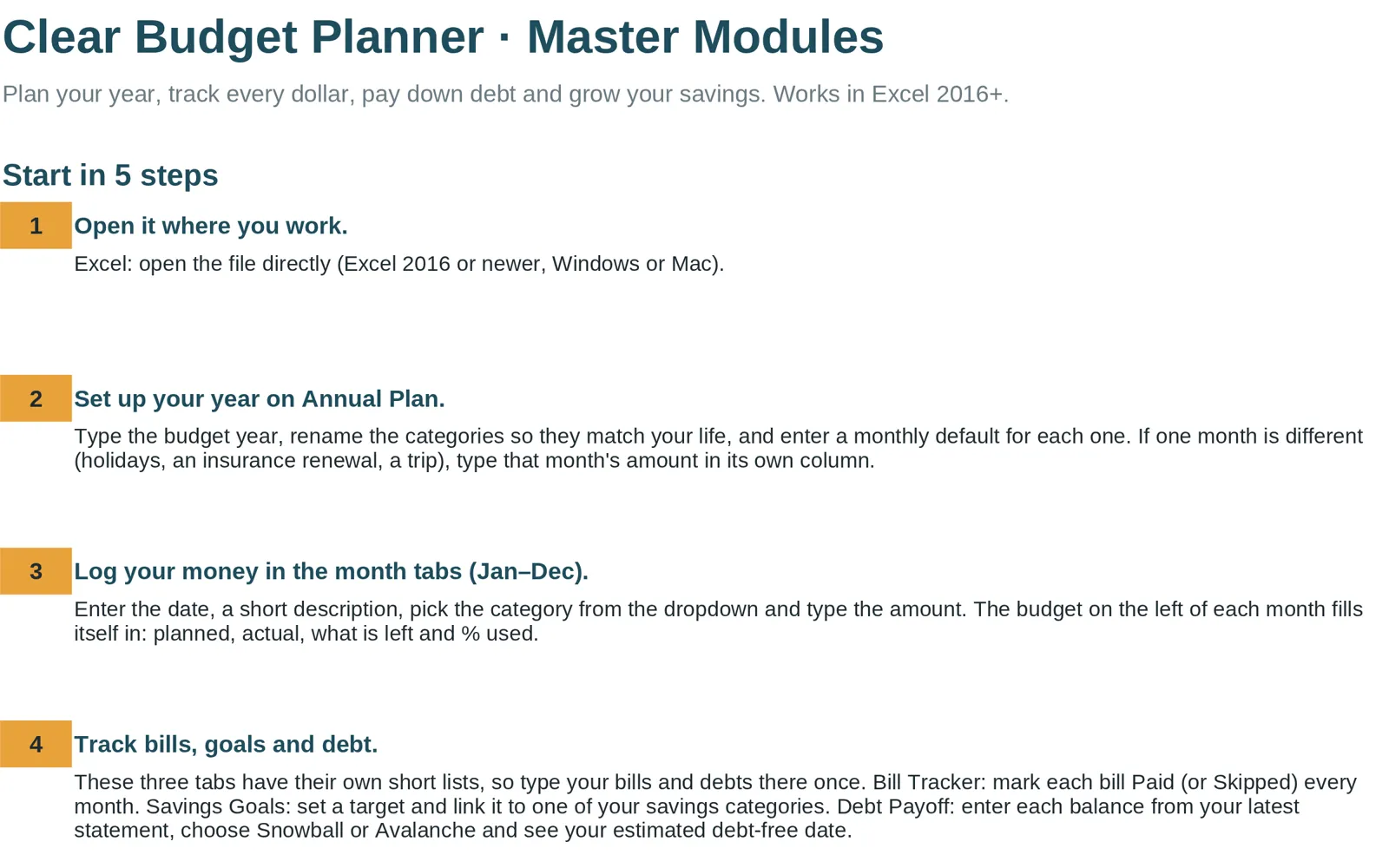
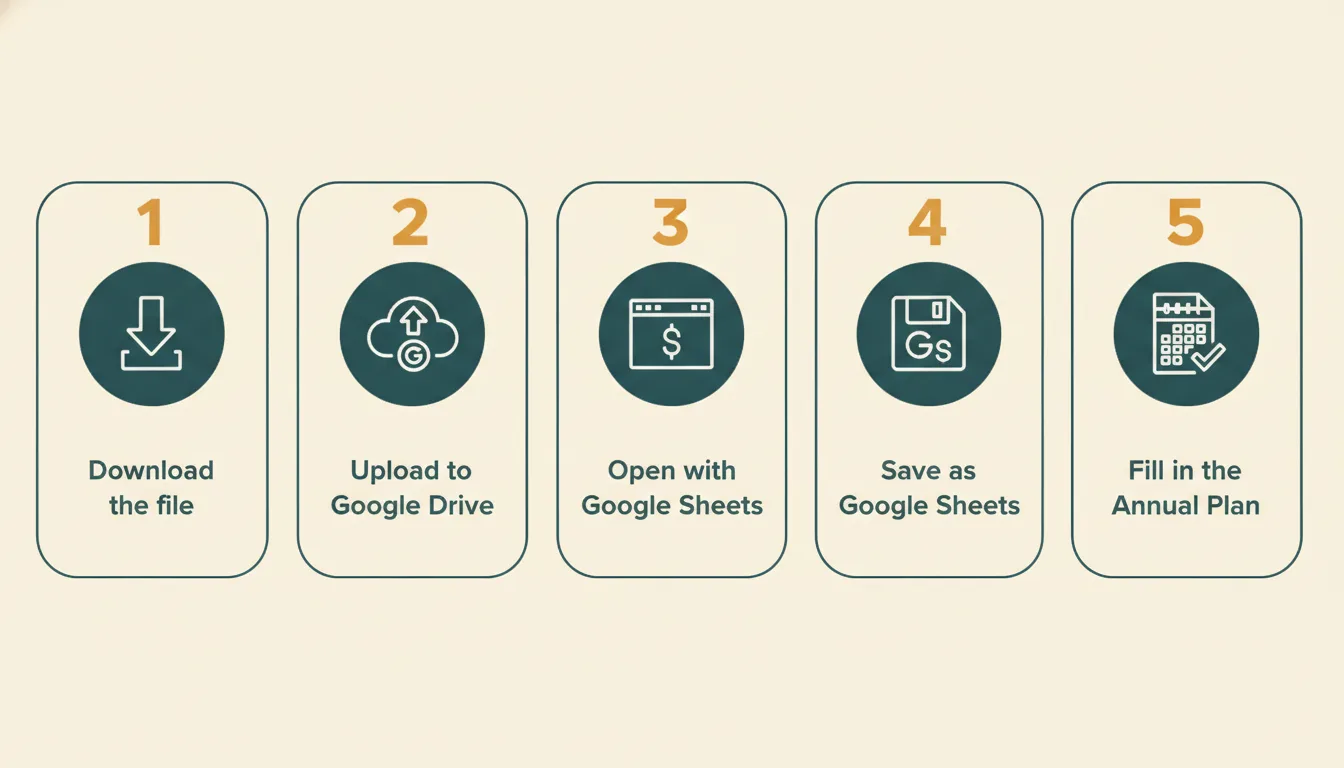
Clear Budget Planner is a spreadsheet workbook for Excel and Google Sheets that gives you the structure described above. It has a Start Here page with five setup steps, an Annual Plan tab for income, bills, savings and debt, twelve monthly tabs, a Dashboard, a Year Summary, a Bill Tracker, Savings Goals, Debt Payoff and Net Worth. It comes as a blank workbook plus a filled-in example, with a Getting Started guide. It is a one-time purchase and not a financial advice service; it is a tool for organizing your own numbers.
What to do tonight
Pull your last two months of statements, total your fixed costs, and write down one savings number you can keep. That alone is a budget. Refine it next week.