Envelope Budgeting: How It Works and How to Do It Digitally
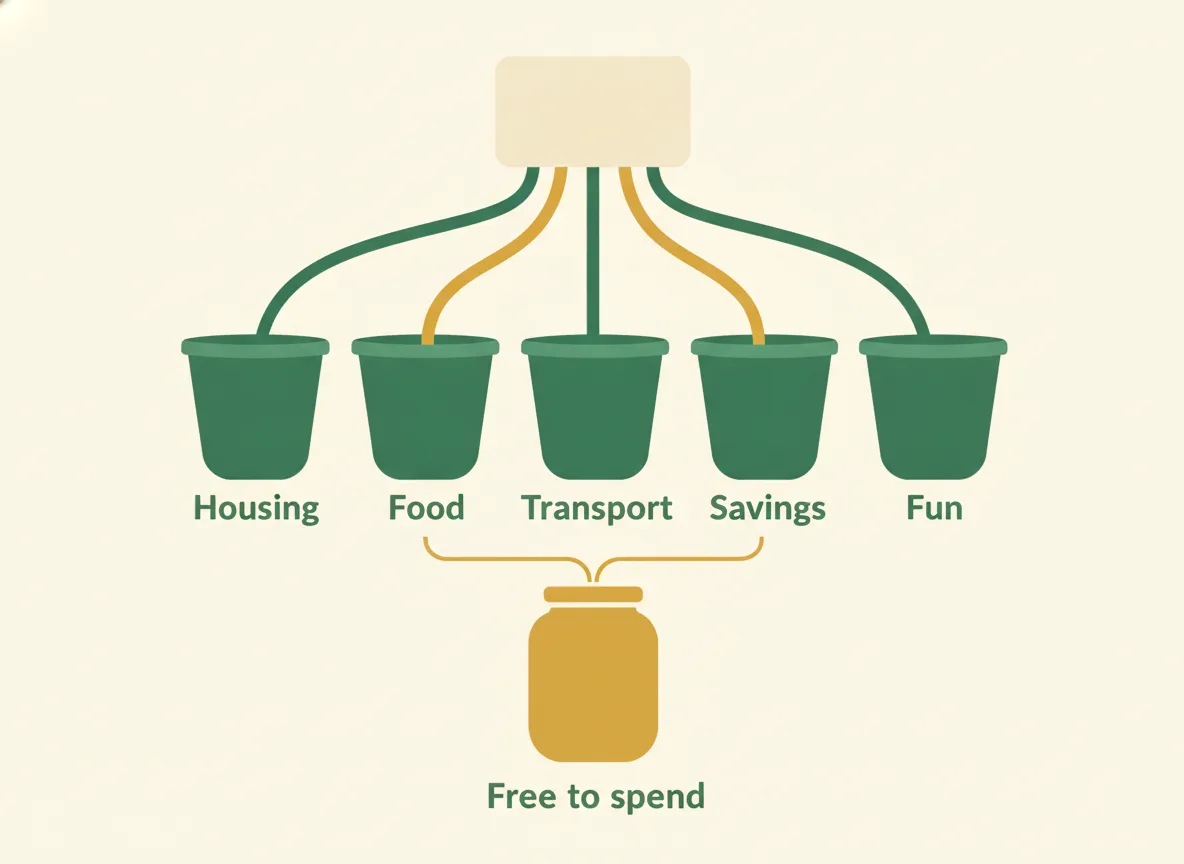
Envelope budgeting means giving each spending category its own limited pot of money and stopping when the pot is empty. Traditionally the pots are paper envelopes filled with cash. The same idea works digitally, and this guide covers both.
How the classic method works
The traditional envelope system has five steps:
- List your spending categories. Groceries, gas, dining out, entertainment, clothing and so on.
- Decide an amount for each for the pay period or month.
- Withdraw the cash and put each amount into a labeled envelope.
- Spend only from the envelope for that category.
- When it is empty, stop. You wait until the next refill or take money from another envelope on purpose.
The strength of the method is that the limit is visible. You can feel an envelope getting thinner, and it is hard to ignore.
What goes in envelopes and what does not
Not every expense belongs in an envelope. Most people split their budget in two:
- Fixed bills, such as rent, insurance and loan payments, paid by bank transfer or card as normal.
- Flexible spending, such as groceries, fuel, dining out, personal care and fun, which go in envelopes.
Envelopes work best for the second group, where the amount changes and overspending is easy.
Pros and limits
| Pros | Limits |
|---|---|
| Spending limits are visible and concrete | Cash is inconvenient for online and card-only purchases |
| Encourages thinking before buying | Cash can be lost or stolen |
| Simple, no software needed | No automatic record of what you spent |
| Works for people who overspend with cards | Does not handle yearly bills on its own |
| Easy to teach to a household | Harder to share between two people in different places |
Neither the method nor its alternatives are right for everyone. If you enjoy the physical approach, envelopes are a reasonable fit. If not, a digital version keeps the main idea.
The digital version
A digital envelope budget keeps three things from the classic method: categories, limits, and a running balance. Instead of cash in an envelope, you have a number in a spreadsheet.
- Create your categories as buckets. The same list you would use for envelopes.
- Give each an amount for the period.
- Record what you spend against each category.
- Check the remaining balance before you buy.
You can even use a separate card or sub-account for flexible spending, to keep the physical separation without cash.
Choosing the period
Cash envelopes are usually filled once a month or each payday. Digital buckets are more flexible: you can work in weekly amounts, per-paycheck amounts, or both. Many people find weekly amounts easier to follow for groceries and fun, because a week is short enough to remember.
From envelopes to buckets
A bucket is an envelope with a calendar. It has a name and an amount, plus a how-often. That extra detail lets you include the costs that cash envelopes handle poorly: the annual insurance premium, the quarterly pest-control visit, the holiday gift budget. Each of these becomes a bucket with a small amount per paycheck, so the money is ready when the bill comes.
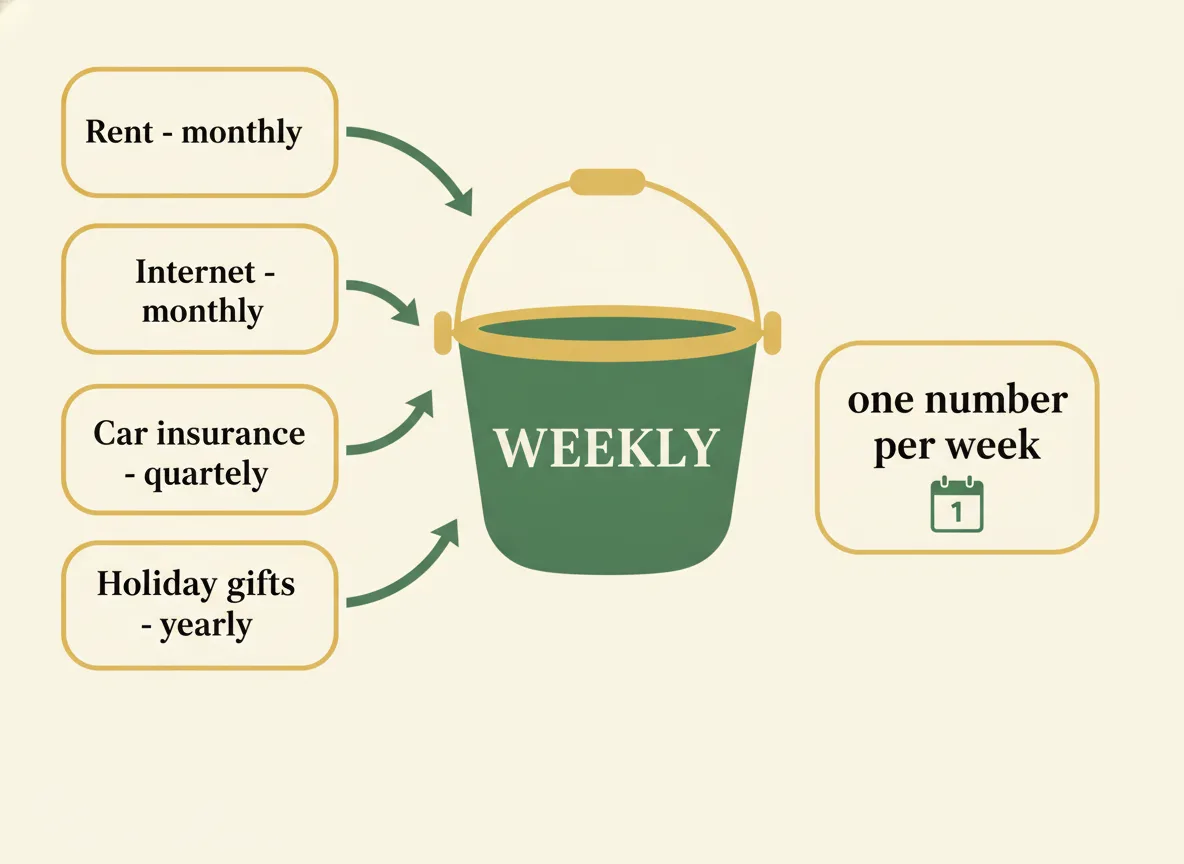
For a fuller description, see what is bucket budgeting.
How to set it up in Bucket Budget Planner
In Bucket Budget Planner, every bucket has an amount and a frequency: weekly, biweekly, semi-monthly, monthly, quarterly or annual. The Buckets tab converts it to a per-week, per-paycheck, per-month and per-year amount. There are no envelopes to carry, and the math for yearly and monthly bills is done for you. The Dashboard shows total income, total assigned, and what is left to spend per week and per paycheck, with a warning if you are over budget.
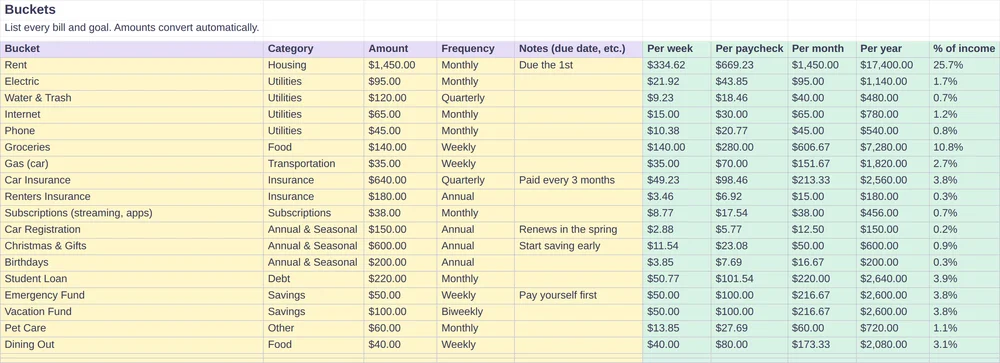
The 12 monthly tabs let you type what you actually spent in each bucket and compare it with the plan, which replaces the "look in the envelope" step. A library of 154 ready-made buckets gives you a starting point so you do not have to write a category list from nothing.
A sample setup
Suppose a household with a biweekly take-home of 2,000 wants envelopes for variable spending and direct payment for fixed bills:
| Type | Bucket | Per paycheck |
|---|---|---|
| Fixed | Rent and utilities | 850 |
| Fixed | Insurance and phone | 150 |
| Fixed | Debt payments | 200 |
| Envelope | Groceries | 280 |
| Envelope | Gas | 100 |
| Envelope | Dining out | 80 |
| Envelope | Fun money | 80 |
| Bucket | Annual and seasonal costs | 120 |
| Bucket | Savings | 140 |
| Total | 2,000 |
All the numbers are illustrative. The fixed items are paid as usual, the "envelope" items are tracked against their limits, and the buckets are set aside for later.
Tips to make envelope budgeting work
- Start with two or three categories. Groceries, fun and dining out are enough to try.
- Be realistic. An envelope that is always empty by the 10th is a sign that the amount is wrong, not that you failed.
- Allow transfers. Moving money between envelopes is fine, as long as you do it on purpose.
- Review monthly. Adjust amounts to match what actually happened.
Envelope budgeting compared with other methods
Envelopes are a way of putting limits on categories. Zero-based budgeting is a way of assigning every dollar of income to a category so that nothing is left over. The two can be combined, and the differences are explained in zero-based budget vs bucket budget. If you are starting from scratch, you may also want the general method in how to budget a paycheck.
This guide is general information, not financial advice.