Travel Budget Template: How to Plan a Trip's Costs in Advance
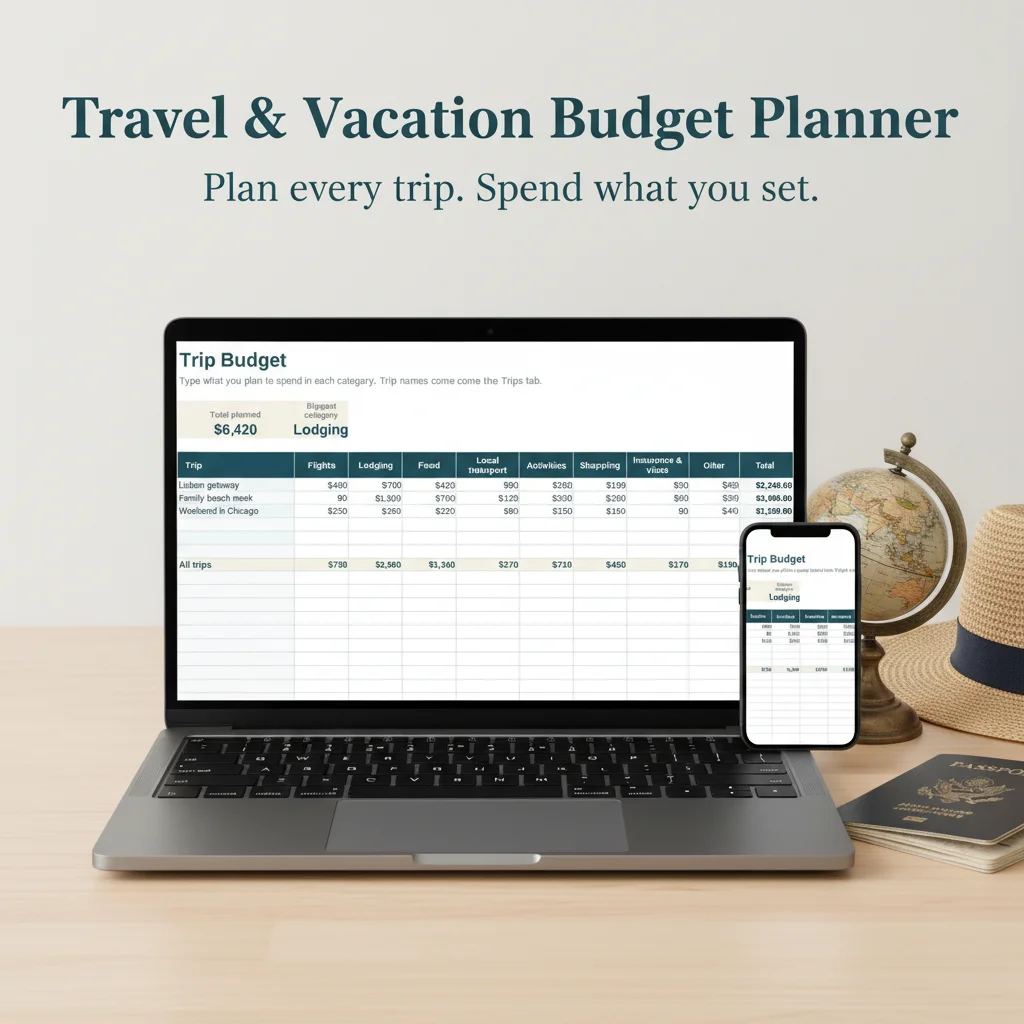
A travel budget template is a sheet that lists every cost of a trip, shows what you have already paid and what is left, and sets a daily limit for spending on the road. Planning before you book prevents the usual vacation hangover: a trip you enjoyed and a statement that ruins the following two months.
What costs a trip really has
People often budget flights and hotel and forget the rest. A fuller list:
| Category | Examples |
|---|---|
| Transportation | Flights, trains, rental car, gas, parking, tolls, airport transfers, local transit |
| Lodging | Hotel, rental, taxes and resort fees, cleaning fees |
| Food | Restaurants, groceries, coffee, snacks |
| Activities | Tours, tickets, entry fees, equipment rental |
| Before you leave | Passport or documents, luggage, clothing, insurance |
| Extras | Souvenirs, tips, laundry, phone data |
| Buffer | Delays, changes, small emergencies |
Add up what you know, estimate the rest from prices on booking sites and set a buffer on top. A common approach is to keep a cushion for the unplanned.
How to build the plan
- Pick the dates and destination. Costs depend on both.
- List every category above. Use a row per cost.
- Enter a planned amount and, later, the actual. Same plan-versus-actual idea as a monthly budget.
- Mark each item as paid or not. Prepaid bookings reduce what you need to carry.
- Set a daily limit for the trip. Food, activities and local transport divided by the days.
- Track while you travel. Log purchases at the end of each day.
A daily spending limit, worked through
Suppose your plan sets aside a total for food, activities and local transport once flights and lodging are paid. Divide that total by the number of days. If a day goes over, take it from the next day, or from the buffer. Seeing "left for the trip" fall each evening keeps you aware without spoiling the trip.
Saving for the trip
Do not wait for the booking date to find the money. Work backward:
- Total cost of the trip
- Minus what you have already set aside
- Divided by months until you pay for each part
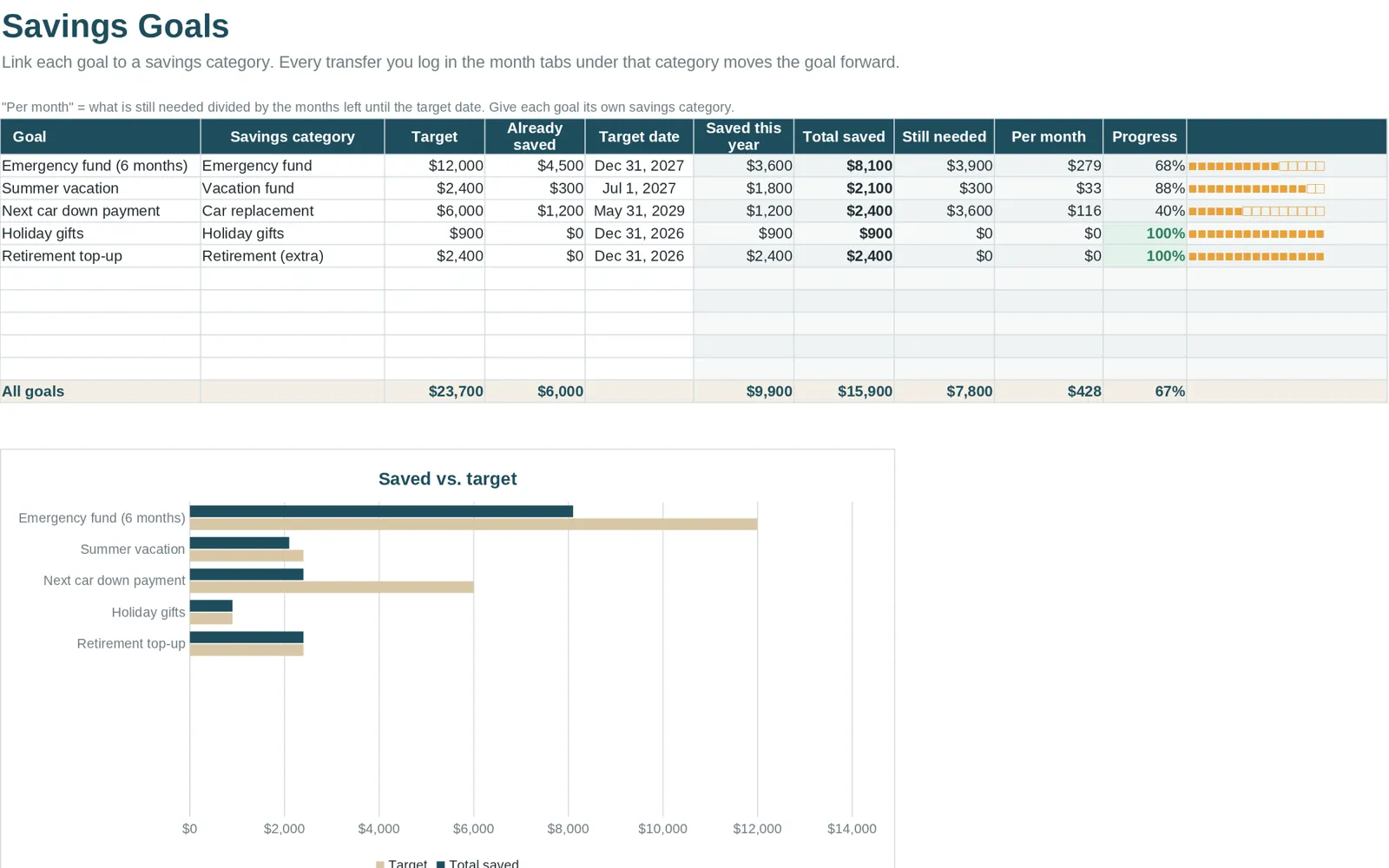
Open a savings goal for the trip and transfer on payday. If you have several goals, such as a trip and holidays, track them separately so each has a visible progress bar. See the Christmas budget planner for how to plan a seasonal fund.
Ways to lower the cost without lowering the fun
- Travel outside peak dates when you can.
- Compare lodging with a kitchen against hotels if you plan to cook some meals.
- Book transport and lodging early and check cancellation terms.
- Set a limit on souvenirs before you leave.
- Choose a few paid activities and fill the rest with low-cost ones.
- Use cards and accounts without foreign transaction fees if you travel abroad, and check current rates and policies yourself.
After the trip
Compare your plan with what you spent. Which categories were over? Which were under? Use that data to set better numbers for the next trip, and move any unused money back to savings.
Where Clear Budget Planner fits
Clear Budget Planner is a full-year budget workbook, so it works for the savings side of a trip: use the Savings Goals tab to set aside money for it monthly, and the Annual Plan and Dashboard to see how the trip fits into the year. It is not a dedicated trip planner.
A separate Travel & Vacation Budget Planner is offered as an optional, paid add-on at checkout. It focuses on a single trip: budget, savings countdown, packing list and itinerary, with transport, stays, food and activities each in their own place and a daily spending cap. It is not included in the main planner.
Putting it all together
For one trip a month ahead, a simple table is enough. For a year with several trips, holidays and big bills, a yearly view helps you see how they interact; read the yearly budget template guide. And if you struggle to hold the line once you are there, how to stick to a budget has habits that carry over to vacations.